
Open-ended toys spark bigger imaginations than “smart” toys because they let a child direct the play, instead of the toy directing the child. At Kids in Motion Learning Center, our classrooms lean heavily on simple, flexible materials, not because technology is bad, but because open-ended play builds skills that flashing lights and pre-programmed sounds cannot.
What Makes a Toy “Open-Ended”
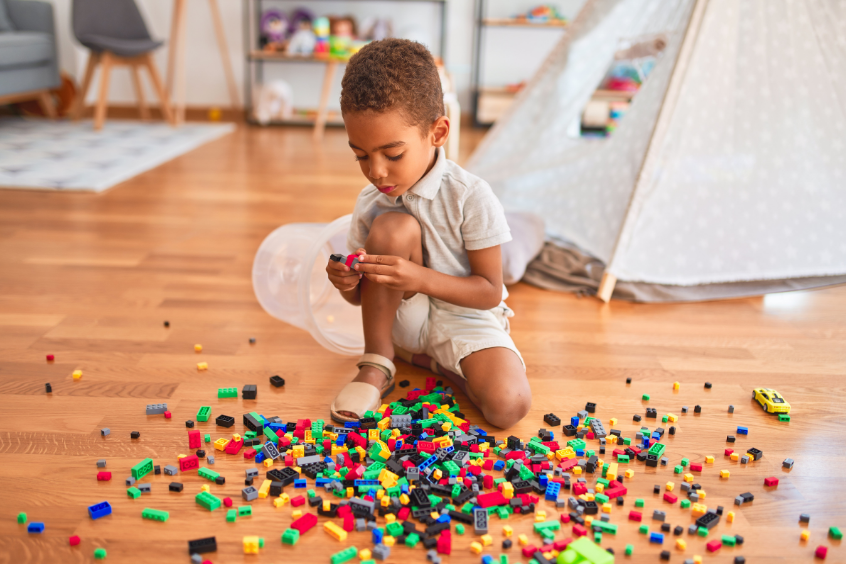
An open-ended toy has no single correct way to use it. Blocks, blank paper, dress-up clothes, and loose parts can become anything a child imagines. A “smart” toy, by contrast, usually has a fixed set of sounds, lights, or responses that guide play in one direction.
Why Open-Ended Play Builds Bigger Skills
Creativity: A block can be a phone, a boat, or a sandwich, depending entirely on the child’s imagination. That flexibility exercises creative thinking every single time the toy is used.
Problem-Solving: Open-ended materials rarely come with instructions, so children experiment, adjust, and figure things out on their own, building real problem-solving skills along the way.
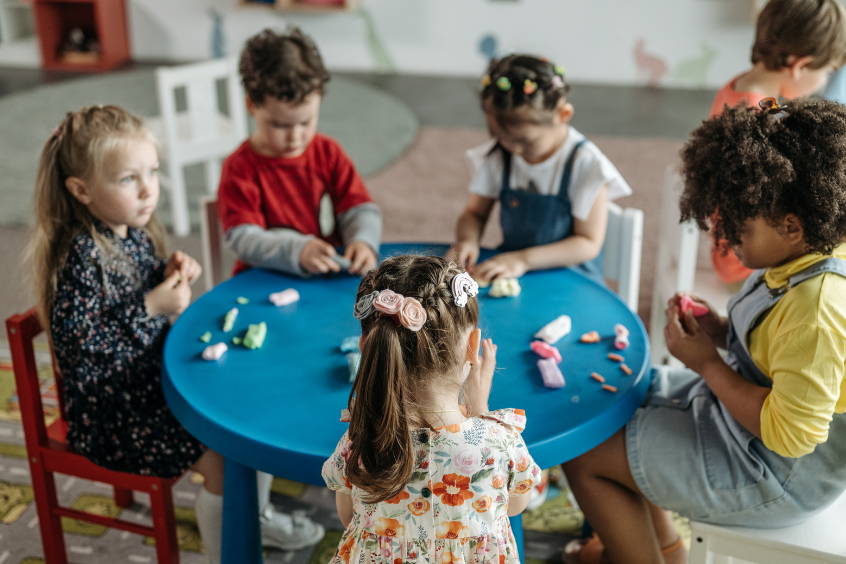
Social Play: Loose, flexible toys naturally invite collaboration, since two children can build entirely different stories side by side using the exact same materials.
Where Smart Toys Fall Short
A smart toy often narrows play down to pressing a button and waiting for a reaction. This can be entertaining in short bursts, but it offers far less room for a child’s own ideas to lead the way. This distinction connects closely to the skills that matter most for kids growing up in a world shaped by AI, where creativity and independent thinking matter more than ever.
Bringing Open-Ended Play Into Everyday Moments
Open-ended play does not require expensive materials. Cardboard boxes, kitchen containers, fabric scraps, and simple blocks can spark just as much imagination as any store-bought toy, often more.
FAQ
Are all electronic toys bad for young children?
Not necessarily. The concern is balance. A classroom or home filled mostly with fixed-response toys leaves less room for the open-ended play that builds creativity and problem-solving.
What age is best for introducing open-ended toys?
Open-ended play benefits children at nearly every age, from stacking blocks as toddlers to imaginative building and pretend play as preschoolers.
How can I encourage open-ended play at home without buying new toys?
Everyday household items like boxes, containers, and fabric scraps work just as well as store-bought open-ended toys and often spark even more creativity.
Encouraging Imagination at Kids in Motion Learning Center
Open-ended toys give children the freedom to lead their own play, building creativity and problem-solving skills that structured, fixed-response toys cannot offer. Kids in Motion Learning Center fills our classrooms with the kind of flexible materials that let imagination take the lead.
Open-ended toys have no single correct way to be used. This flexibility builds creativity, problem-solving, and social play. Smart toys often narrow play down to a fixed set of responses. Everyday household items can spark just as much imagination as store-bought toys.
If you are looking for a daycare in Snellville, Tucker, or Loganville that fills classrooms with imagination-building, open-ended play, please contact your nearest center to learn more. To see our classrooms in action, you can book a tour today.
Explore our programs to learn more about how play shapes learning at every age.
Kids in Motion Academy
📍 3602 Chamblee Tucker Rd, Atlanta, GA 30341, United States
📞 Snellville: (470) 545-2600 Tucker: (470) 359-5775 Loganville: (404) 275-4917
📧 info2@kimalearningcenter.com
🌐 www.kimalearningcenter.com
